• Home
  • Blog
  • Media
  • Contact Me
  • Newsletter
  • Bowlings Abroad
  • Nerd Farmer Podcast
  • Teaching Civil Liberties
  • Supporting Undocumented Students
Menu

Nate Bowling: American Teacher Abroad

Street Address
City, State, Zip
Phone Number

Your Custom Text Here

Nate Bowling: American Teacher Abroad

  • Home
  • Blog
  • Media
  • Contact Me
  • Newsletter
  • Bowlings Abroad
  • Nerd Farmer Podcast
  • Teaching Civil Liberties
  • Supporting Undocumented Students

Why I Kneel: Freedom of Expression Includes the Right to Protest

September 20, 2016 Nathan Bowling
My silent protest at Century Link Field on September 17, 2016. Photo by @zag08.

My silent protest at Century Link Field on September 17, 2016. Photo by @zag08.

Like many Americans, military service is a tradition in my family. My mother, father, step-father, older brother and both of my uncles all served in the US military. My parents served in wartime. My father in Korea, my step-father in Vietnam and my mother served in Saudi Arabia during Desert Shield and Storm.

I am a veteran, but I am not a hero. I served in the US Air Force Reserves from 1997 until 2003. I joined during peacetime for the college money, served with distinction, earning several commendations, but left the service in 2003 because I liked the idea of finishing college more than I liked the idea of going to fight in a war that I didn’t believe in.

I love my country, but I went to the James Baldwin School of Patriotism. Baldwin wrote, “I love America more than any other country in this world, and, exactly for this reason, I insist on the right to criticize her perpetually.” I am a patriot, not a nationalist. I love my country, but I see her flaws.

On Saturday, before the Seattle Sounders play the Whitecaps, I will be kneeling during the US National Anthem in Section 122. This is not a political act. This is a cry for help.

Every year I stand before my government class and we read and discuss the Founding documents of our nation: Jefferson’s Declaration, Madison’s Constitution, and Marshall’s early verdicts. Over the last few years the gap between the freedoms and equality enshrined in those documents and the reality my students face--particularly my students of color--has become increasingly apparent.

I understand why many people are upset about the protests, but I do not think there are “right” and “wrong” times to protest injustice. I believe and I teach my students that society isn’t improved by stifling dissent, but by engaging dissenters in dialogue. We’ve seen time after time in US history that periods where national unity is called for often mask harm to marginalized communities: the Alien Act of 1918 and the Sedition Act during World War I, the Japanese Internment during World War II and the Jim Crow South afterwards, and the fivefold rise in anti-Muslim hate crimes after 9/11.

What middle class white America does not grasp is the absolute dread that people of color, particularly those in poverty, have of law enforcement.

So far this year US police have killed 816 people (as of 9/14/16). In 2015, the number was 1,207. Many of these people were armed or “resisting arrest." But the penalty for resisting arrest is not summary execution by an agent of the state. Some of these incidents were captured on video and viewed by millions. But the vast, vast majority happened with little to no coverage from social media and the national press.

This is what these protests are about.

The protests started by Kaepernick, continued by Rapinoe and coming soon to GA, are an attempt to gain the attention of the apolitical, unaffected and unconcerned. Aside from the President, the most visible Blacks in America are professional athletes. Kaepernick is not fighting for himself--he is fighting for the voiceless. As a society, we have allowed the normalization of use of force by officers of the law upon some of the most vulnerable members of our population. These protests are an attempt to get the nation’s attention on the biggest possible stage.

Herculez Gomez was recently asked about the protests in the Seattle Times. He responded that “If you were to have asked me this 10 years ago, it would have been very different. I would’ve told you about me getting pulled over at 16, being asked to show my license and registration, reaching in the glove compartment for it and all of a sudden getting a handgun in my face — because the cop was scared I was reaching for something else.” This resonates with me. Herc and I are roughly the same age. I have family in law enforcement. My most terrifying encounters with law enforcement are now decades old. I imagine, if I didn’t have frequent contact with young people, I might feel as he does. But as a teacher in a low income, urban school these issues have an immediacy for me. Everyday at Lincoln, I teach sixteen year-old Hercs and Colins and after listening to them day-after-day, year-after-year, I can’t remain neutral. I won’t.

When Muhammad Ali passed away in June, I wrote a piece criticizing athletes of the “$10 million endorsement era,” particularly Michael Jordan, for their silence on issues of justice. Many of the same people who praised Ali in his twilight years and after his death have contempt for Kaepernick and Rapinoe; the cognitive dissonance is stupefying. I applaud Kaepernick, someone I have reviled for half a decade, for taking a stand. I commend Rapinoe for joining him and keeping the conversation going. I will be kneeling during the anthem in the Brougham End and at Husky Stadium this weekend. If you want me to stand up during the anthem, stand with me.

Stand with me in advocating for reforms to policing like those proposed by Campaign Zero.

Stand with me in favor of body cameras.

Stand with me against militarization of police.

Stand with me against stop and frisk.

Stand with me against use of force laws that prevent officers who kill unarmed citizens from facing charges.

Stand with me against civil asset forfeiture.

Stand with me against mass incarceration of nonviolent drug offenders.

If you want me to stand up, stand with me.


This post was originally published on the Seattle Sounders fan blog, Sounder at Heart


In Society, Sports Tags Sounders, Keapernick, #BlackLivesMatter
1 Comment

A Teacher Travelogue: On What Travel Reminds Me

August 29, 2016 Nathan Bowling
Me, having a very spiritual moment with a baguette in Paris

Me, having a very spiritual moment with a baguette in Paris

As teachers we never really stop teaching and learning. Sometimes the venue changes, but we are constantly thinking about how we can apply what we’re seeing and experiencing to our practice. This is true, especially during the summer.

Travel has become an essential part of my life and my travel contributes to my ever evolving worldview. In early spring 2007, halfway through my first year of teaching, my grad school roommate Pete (now a fourth grade teacher in Yakima, WA) and I hatched a plan to go abroad. As first-year teachers, our sole criteria for deciding our destination was cheap airfare. We found a sub-$700 flight to Bogota, on a now defunct travel site. At age 27, I secured my first passport and took my first (non-military) trip abroad. We spent four weeks traveling through Bogota, Santa Marta, Cartagena and the Caribbean Coast. I used my college Spanish for the first time. I sailed for the first time. I hitchhiked for the first time. I went SCUBA diving for the first time. I bathed in volcanic mud. I ate a fish so fresh out of the water, the fisherman was still unloading the rest of his haul when I began eating it.  

I was hooked.

For the last ten years, at the end of the school year, I have packed the same red & black backpack and headed abroad. My travel partner has changed, but the ritual remains the same. This summer I spent four weeks with my wife Hope, an English teacher, traveling through Western Europe: Germany, France, Spain and Portugal. Travel is essential to me. We have to forgo some “wants” during the year to afford it, but it’s worth it. My wife jokes about "Travel Nate," an alternate version of me, who is less harried, less tense, and more at ease. When I travel I get headspace to reflect on my practice. I get time to read all the books I wanted to read during the school year. I feel like a yoke of grading and obligation is removed from my neck. I feel peace: something that is far too rare for people in the US, especially people of color, people in poverty and even NFL quarterbacks.

A mural along the Rhine in Mainz, Germany

A mural along the Rhine in Mainz, Germany

Early in our trip, after I posted a photo online, a colleague and mentor in the profession, asked “what does it feel like to be black in Germany?”

I responded: I always feel “more free” when we travel… But knowing what's happening back home, right now even more so… It's hard to put into words... I feel black + carefree and I haven't felt that way in a long, long time.

When I travel, my brain works differently. I see things here differently. My understanding of America is sharpened by even a brief absence from it. I believe that if you want to be truly awake, you have to leave home. I think most importantly, travel provides me with distance to consider my life back home, what I prioritize, my habits, my consumption and my aspirations. Travel reminds me that there are better, smarter ways.

Travel reminds that US media coverage is problematic and I need to seek and encourage my students to pursue alternative sources. I spent this summer watching France 24 (their English language network), Deutsche Welle (Germany) and CNN International. I was struck by the expansive and nuanced nature of CNN International’s coverage of events in the US and abroad. Over the last year, in the US, CNN has “distinguished” itself with problematic coverage, commentary and HR choices. But this summer reminded me that CNN hasn’t forgotten how to “do news.” They choose to fill their US coverage with the likes of Wolf Blitzer, former Trump aide Corey Lewandowski, and (jive) Don Lemon. CNN gives their international audiences investigative reporting, searing documentaries and in-depth analysis of events with historical context. We get clownish coverage: gigantic countdown clocks to trivial events, talking heads who are ideologues rather than experts and massive chyrons that fill ⅓ of the screen, but don’t actually tell you anything. We get louder, inferior, less informative coverage, because that’s what sells.

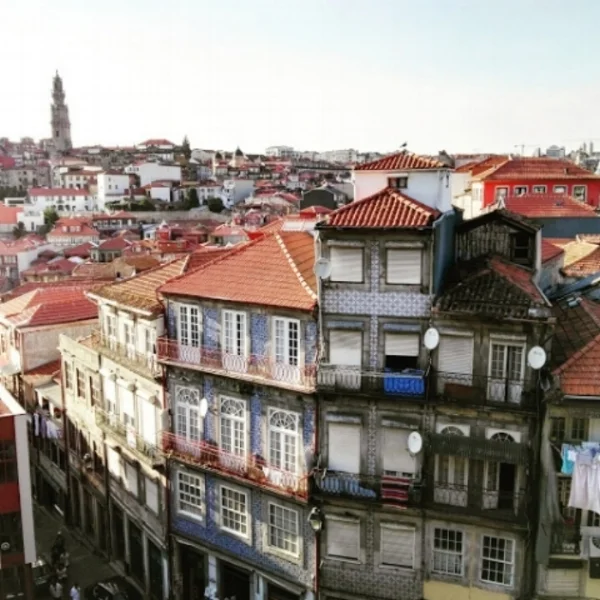
The view of Old Town in Porto, Portugal from the Cathedral

The view of Old Town in Porto, Portugal from the Cathedral

Travel reminds me of the proper role of law enforcement in a civil society. Police killings are a uniquely American problem—something I remind my students of while discussing civil liberties in government class. While we were abroad, at least 95 people were killed by US law enforcement. Victims 630 through 725 of this year. Travel reminds me that issues of race, justice and policing should be at the forefront of many of our classes this year.

Just before I left for Europe, Minneapolis school cafeteria worker Philando Castile and Alton Sterling were killed by police. Both were killed at the end of what should have been routine encounters with law enforcement. These encounters were routine alright—part of a routine that allows the normalized killing of unarmed Americans by people otherwise sworn to protect and serve them. This fall students will show up to school in Minneapolis wondering “where Mr. Castile went? This September, Castile and Sterling’s children will be in our schools. These children—fatherless because of the actions of other agents of the state—will be in our classrooms. What will we say to them? How will we comfort them?

Travel reminds me there is a better way. Traffic stops should not end in murder. People should not be incarcerated for profit. Other industrialized nations don’t fund local government programs through revenue from red light cameras, placed largely in their poorest neighborhoods. They do not allow civil asset forfeiture [the practice of police seizing private property (or funds) they allege have been used in criminal activity for department use and budgets]. These are our problems alone.

Travel reminds me I have nothing to fear from “the Other.” We arrived in Europe four days after the attack in Nice. We expected to find anxiety and fear. We found none. Despite a very real threat from international terrorism, they do not live in constant fear. I want my students to inherit a world where they don’t have to be afraid.

Our view atop the Arc de Triomphe

Our view atop the Arc de Triomphe

Travel reminds me of the importance of our work. As an educator I get to teach my students a series of lessons, academic or otherwise about government, geography, character and life. As we prepare to return to school, my travel has reminded me that we have an obligation to prepare our students to be active participants in civil society. We must model for them how to thoughtfully question authority. We must implore them to question the underlying and unstated premises of arguments they’re presented with. We must push them to listen to understand, rather than listening to refute. We must teach them to believe more in discourse and less in debate. We must teach them to love to read and to read to grow.

This is the work of teaching. We get to help set students on their paths. We get to leave our cognitive fingerprints and habits of inquiry on the next generation. We get to plant seeds. Helping kids become curious about the world isn’t on my evaluation, but it's probably the most important thing I do. This work can’t be tested or assessed by the SBAC—it’s too important for that. It doesn’t fit neatly into an ELA standard, but it’s why we do what we do.

Travel reminds me of that.

In Personal, Education, Travel Tags Travel, #BlackLivesMatter
2 Comments

We have the answer, we choose to ignore it

June 22, 2016 Nathan Bowling
A child, as a pawn in a very old game.

A child, as a pawn in a very old game.

There is a version of American history that I was taught in school. You were probably taught it too: America was founded, there were Indians, we had slavery--slavery was bad. Andrew Jackson screwed the Indians and they vanished. We had a Civil War and then Lincoln freed the slaves. After the war black people were still subjugated, but only in the South. Then there were two World Wars, with a Great Depression in between, and then Martin Luther King led some protests, had a Dream, died, and now we are all equal.

This version of history yadda-yaddas through decades of struggle and intentionally obscures decades of laws and policies that helped construct and codify segregation in local, state and federal law. Segregation is not an accident of American history. It is the story of American history.

We have the power and tools to dismantle segregated schools. To do so, we must disabuse ourselves of the notion that somehow, organically, in every major urban area in our nation, a uniform pattern of segregated housing, segregated schools, and disproportionate policing practices simultaneously arose. That is, at best, magical thinking. Segregation was constructed by the government, at the behest of the people (for more on that construction see here, here and especially here). It something we chose to build; it is no different than the transcontinental railroad or the Washington Monument.

We make a choice, we make it everyday. When young, white professionals, live in a working class, mixed race neighborhood as long as they must, but flee to whiter wealthier confines, as soon as they can or when it’s time to have children, they serve as the foot-soldiers of neighborhood and school segregation. Most urban segregation is the result of the absence of white families--white flight. Put differently, people of color do not choose to live in segregation. Segregation is created by white families when they make the choice, conscious or otherwise, to leave communities, en masse. This framing is essential in understanding and solving the problem.

The hallways of my school tell this tale all too clearly. Abraham Lincoln High School was built in 1913 and we have portraits of every graduating class from 1914 through the near present. These are amazing historical markers. I often walk my students through the pictures. I point out famous grads, we discuss how the senior classes in 1942-45 were smaller because so many males enlisted. We note the appearance of the first afros. Every year the same question comes up… “What happened to all the white students?”

The photos are nearly uniformly white until the late 60s (there are a few Japanese students in the late 30s photos, but they vanish after the internment). And then poof somewhere between 1968 and 1972 everything changed. Lincoln is now 75% students of color; it is situated in a city that is 65% white, in state that is 77% white--nearly the perfect inverse. These figures are neither organic nor an accident. 

School segregation is the result of intentional policy choices and governmental interventions. It was constructed, and to end it we must deconstruct it through further interventions. We also must acknowledge that segregation was created at the behest of middle class white voters and business leaders and it can only be undone at their behest.

Frankly, I am not hopeful about that happening, longtime readers may recall my response to the Fusco letter--I think his views are more mainstream than we care to admit. When Seattle began busing, 3,000 white students vanished from the district. Today 30% of the students in Seattle attend private schools. Those Venn Diagrams overlap. 

These are all choices. We choose to live and teach our children this way, but we don’t have to. There is a better way.

In Education, Society Tags busing, segregation, integration
5 Comments
← Newer Posts Older Posts →

POWERED BY SQUARESPACE