• Home
  • Blog
  • Media
  • Contact Me
  • Newsletter
  • Bowlings Abroad
  • Nerd Farmer Podcast
  • Teaching Civil Liberties
  • Supporting Undocumented Students
Menu

Nate Bowling: American Teacher Abroad

Street Address
City, State, Zip
Phone Number

Your Custom Text Here

Nate Bowling: American Teacher Abroad

  • Home
  • Blog
  • Media
  • Contact Me
  • Newsletter
  • Bowlings Abroad
  • Nerd Farmer Podcast
  • Teaching Civil Liberties
  • Supporting Undocumented Students

Why the Left Can’t Win

April 30, 2023 Nathan Bowling

Next year, both the US and Mexico will hold presidential elections. My students wanted to understand why someone like Mexico's AMLO can't win in the US, and I had a helluva time explaining why.

My students are taking their AP Comparative Government & Politics exam on Wednesday. In the course, we examine the systems of government in six states: the UK, Russia, China, Iran, Mexico, and Nigeria. We spent this week reviewing material and concepts from the year. My feelings about the exam and the College Board in general are mixed, at best, and I recently detailed them on the TG2 Blog. But despite my personal reservations about the org, I’m a professional and make sure students are prepared for their exams. They’re reviewing the major and some more niche concepts from the course,  from how Nigerians elect their legislature to how the Chinese Communist Party limits the independence of the judiciary. 

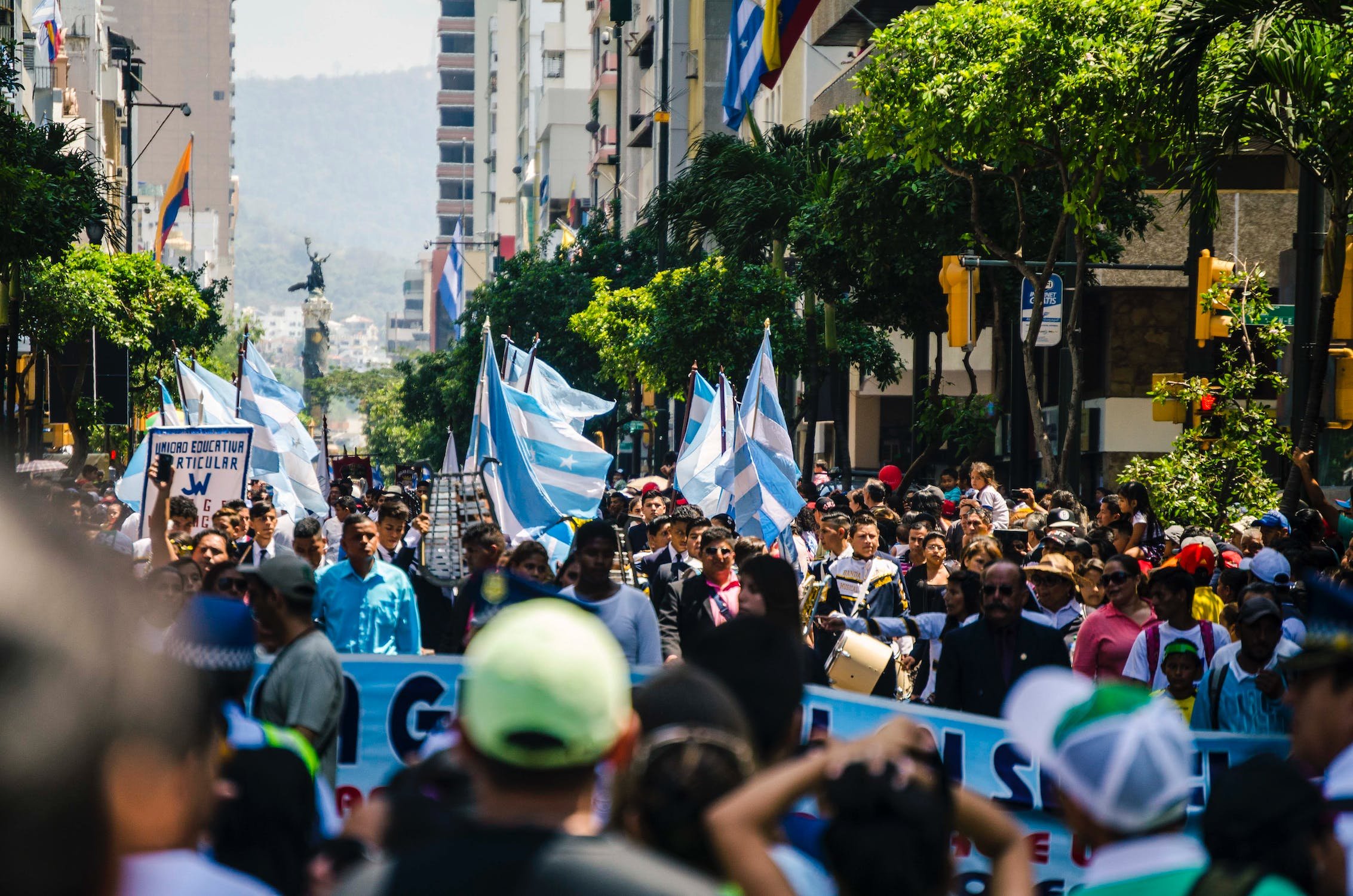
On Thursday, we discussed the term-limit system in Mexico. To prevent the entrenchment of figures like Robert Byrd (he represented West Virginia in the US Senate from 1959-2010, a gobsmacking 51 years), Mexican politicians are denied the right to serve consecutive terms. Notably, the Mexican president is elected to a single six-year term with no chance for reelection. The current Mexican President, Andres Manuel Lopez Obrador, will leave office in 2024 and Mexico will elect a new leader (along with the US—the cycles sync every twelve years). AMLO is a singular figure in Mexican politics. He served as the former mayor of Mexico City in the 2000s. He ran for president unsuccessfully in 2006 and 2012 before winning the office in 2018 with 54% of the vote. He is a left-wing populist figure and leader of the MORENA Party. 

AMLO’s populism became a topic of a rabbit hole conversation in class. My students couldn’t seem to get their heads around the inability of left populists, like AMLO, to get a foothold in the US and throughout the Anglosphere: Canada, UK, Australia, and NZ. I was unable to help them and I have been thinking about it for the last few days. I realize the answer I gave them Thursday is “man, it’s really complicated” is both a copout and correct.

In contrast to the US, left-populists have found electoral success to our south. In addition to AMLO, there are figures like Evo Morales who was elected as the President of Bolivia in 2005 and led the country until 2019. He was a former farmer and labor leader who campaigned on a platform of economic justice, indigenous rights, and anti-imperialism. There was also Rafael Correa. He served as president of Ecuador for twelve years. He was an economist who advocated for socialist policies and investments in education, healthcare, and infrastructure. Even Lula in Brazil, who resumed office in 2023, is considered a populist. 

No such equivalent figures have risen in the US (or elsewhere in the Anglosphere for that matter). The easy answer is to blame corporate media coverage or capitalism, but while each of those play a role, they absolve people on the left of their culpability and unforced errors.

I have my thoughts, but they’re largely grounded in Chomsky’s Manufacturing Consent, but I am curious about yours. 

Take your best shot at answering my students’ question: Why are left-populists more successful in Latin America? Why do you think left-populism is so unsuccessful in modern US politics? Why is it that populist figures like Trump and Johnson (in the UK) were able to win power but similarly populist left figures can’t seem to get traction? I’d love to hear your thoughts* hit my inbox or leave a comment and I’ll share some responses next week.

*One caveat: I may catch hell for this but the “Bernie got screwed by the DNC” meme isn’t real. Bernie was my preferred candidate in 2016 but the reality is he garnered fewer votes (13,210,550 to 16,917,853) and delegates (1865 to 2842) than Clinton. He didn’t get screwed—he lost and lost again in 2020.
In Politics, Society Tags COGO, AMLO, Bernie, 2024

Being Choosy About Online Spaces

April 17, 2023 Nathan Bowling

The speech crisis in the US is as real as the Easter Bunny and the world needs another poorly moderated online platform like Substack Notes like I need a hole in the head

Over the last few years I have grappled with the size and scope of my digital footprint. I had more than a few “Nate, you’re better than this” moments while reading two books in particular. No Filter by Bloomberg writer Sarah Frier, got me off of Instagram and now I avoid the entire Facebook Suite of apps. Although, leaving WhatsApp while living overseas is nearly impossible because of how integrated it is into commerce here and because family back home seem disinclined to learn how to navigate Signal.

Frier came on the podcast and I found the truthpaste she squeezed undeniable. Her book and our conversation came down to three key points: 

  • Algorithmic social media gives us each our own version of “the truth”, feeding our egos, biases, and prejudices;

  • This is contributing to political polarization and escalating political violence, undermining our democracy and fraying the fabric of our society; 

  • We have no idea what the long-term implications of any of this are—it is unprecedented in human history—but all seems quite bad.

A fourth point that I walked away from our conversation realizing is that our continued use of these platforms makes us complicit in the societal havoc they wreak.

A little later, I read The Age of Surveillance Capitalism by Shoshana Zuboff. She built on Frier’s ideas as part of a larger critique of post-industrial, late-stage capitalism. While Frier’s book was largely about the societal harm that algorithmic social media heaps upon us, Zuboff leaned into privacy violations and how our data is sold by and to some of the worst among us. I was struck repeatedly by the idea there’s a whole segment of bad actors who produce nothing, but make billions serving up data on our private comms, movements, and purchases to the highest bidder.

It was after finishing Zuboff’s book that I left Twitter for the first time. It was after Elon Musk’s purchase of the platform that I left for good and started writing this newsletter. 

Defenders of Musk say he’s a champion of free speech but that claim doesn’t stand up under scruitiny. Musk’s vision of free speech is a limited one. He doesn’t mean the freedom to criticize him—that can get you banned or your verification revoked. He doesn’t mean the freedom to build competing platforms—that can get your API access revoked. He doesn’t mean the ability to organize online anti-fascist networks—that can get you exiled to Mastodon. He, like many on the online right, see free speech as a one way street—a guarantee they and people they like can say whatever troll-y nonsense they want no matter how racist, vile, or bigoted it is.

It’s these issues of free speech and platform choice that I want to center today. 

I chose to write on Substack because I didn’t want to be on a platform that I felt was a Nazi Bar. I wouldn't go to a bar that knowingly served Nazis. I wouldn’t go to a church that knowingly welcomed Nazis. I wouldn’t work at a school that knowingly hired Nazis. This made the decision to leave Twitter and write here an easy one.

But this week Substack introduced their Notes feature and… oh, boy.

Substack pre-Notes was a business product. They, the service provider, distribute the newsletter. I, the writer, am responsible for the content. If you, the customer, find my takes unacceptable, you can unsub.

But Notes is different; it is a Twitter clone, another network with an algorithmic timeline. With that comes the need for robust content moderation. I get this. You probably get this but somehow the folks at Substack don’t. 

This week in an interview with the Verge, Substack co-founder & CEO Chris Best fell all over himself trying to answer very basic questions about what kind of content they’d allow on Notes. 

The question “hypothetically, can someone promote genocide on your platform?” shouldn’t be a hard one, but for Best (and too many tech bros) it is. 

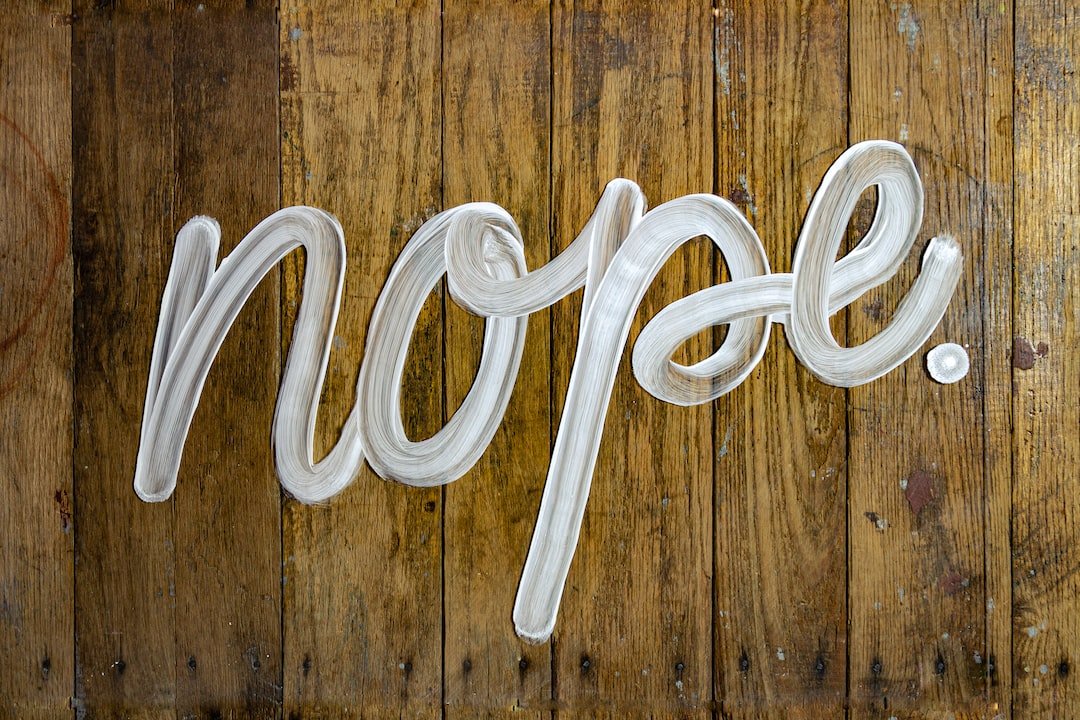
I found this really disappointing. This week, a handful of subscribers asked if I will be using Notes. My answer is “nope.” I am not excited about the Notes product. Most of you read the newsletter in your email inbox, the old fashioned way (I get great data on this). You all don’t generally use the Substack app and I don’t plan on using Notes until they can prove it won’t be a Nazi Bar.

One way of reading all of this is that “Nate’s just fragile” and is seeking or creating bubbles or safe spaces. That framing is juvenile AF. It’s not about fragility, it is about being discerning with the company you keep and places you give your time and business.  

In Personal, Society Tags Substack Notes, Twitter, Elon Musk, Free Speech

How the Culture of the WWE Took Over US Politics

April 10, 2023 Nathan Bowling

The gap between politics and the world of pro-wrestling has become non-existent. We're seeing politicians drop "heel" promos to generate campaign donations and "heat" leaving policymaking to rot.

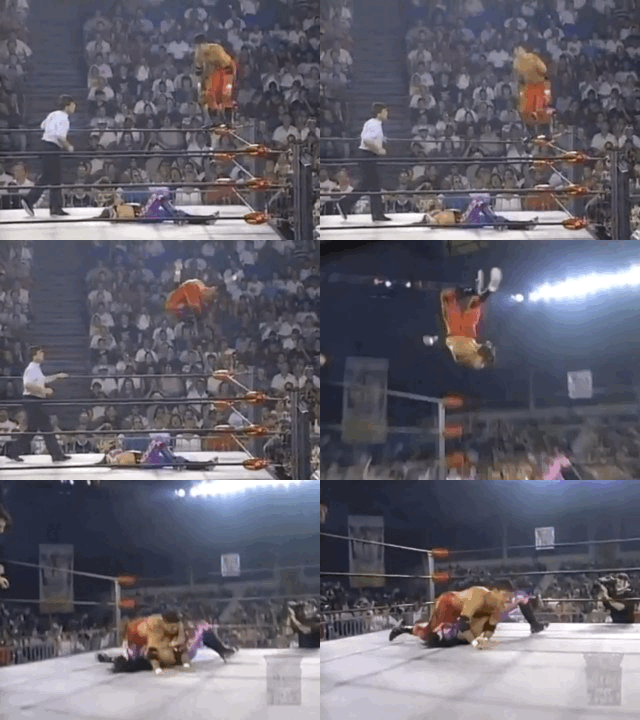
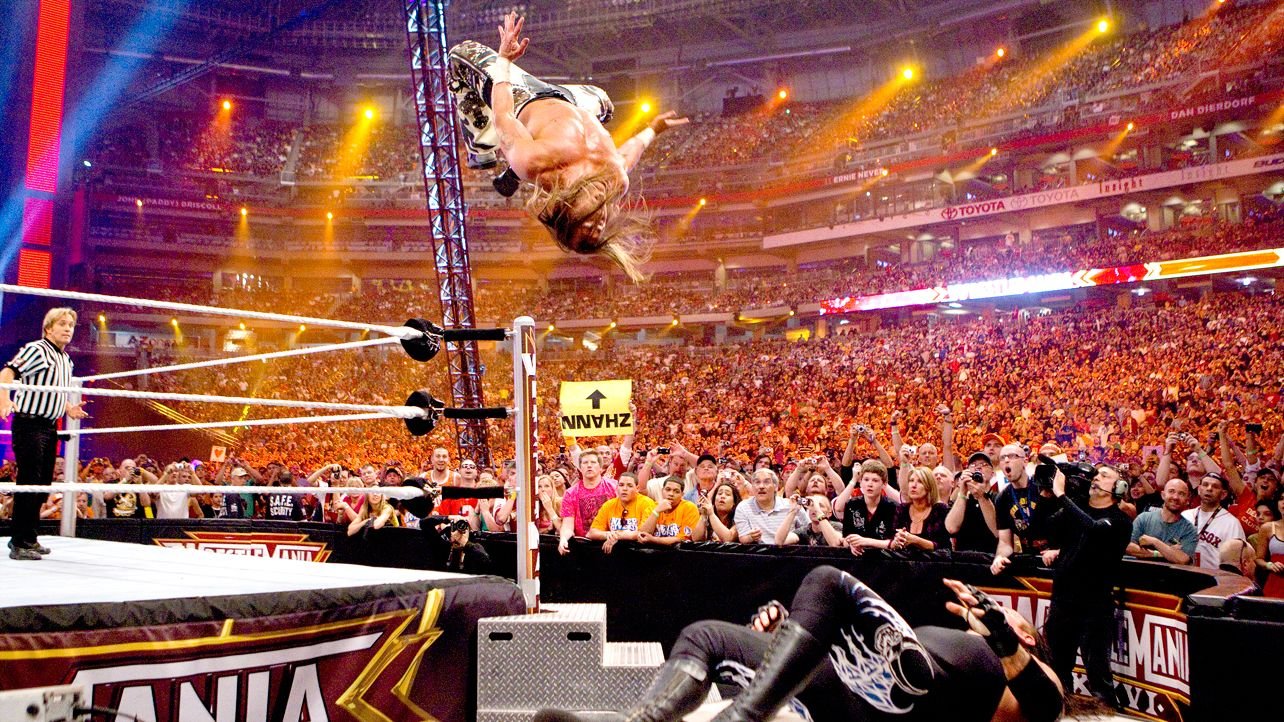
Throughout my career, the Sunday evening work session has become a ritual. I sit down at about four o'clock and start prepping for the week ahead. For atmosphere, I usually have some combination of Law & Order, soccer, or wrestling in the background. Wrestling is actually perfect for productivity. You can focus on your task and mostly tune it out. The crowd and announcers will signal you to tune in for the chair shot, occasional shooting star press, or the finishing move. WrestleMania XXXIX happened last week at SoFi Stadium in LA, so it was my background this weekend. 

Wrestling is theater. It’s a scripted soap opera (in tights) with feats of athleticism and risks that defy common sense. But for a person with my worldview, enjoying the product is complicated. You could build an encyclopedia of the racist and xenophobic gimmicks that have been used over the years (see below). Women’s bodies are habitually objectified. The people in charge of the two major promotions (AEW and WWE) are billionaires of questionable character, both born into wealth.

It goes deeper than that. If you look at their biographies, Donald Trump and Vince McMahon’s resumes are largely indistinguishable up until about 2015. Both inherited businesses from their fathers: Trump a real estate empire, McMahon the then WWF. Both spent much of their careers awash is scandal. McMahon was indicted in federal court in 1994, charged with providing steroids to wrestlers. He was forced to resign as chairman of WWE in 2022, after it came to light that he, like Trump, paid hush money to a mistress. Their lives are intertwined in other ways. Trump made several appearances in the WWE and was inducted into the WWE Hall of Fame in 2013 and McMahon’s wife served as a member of Trump’s Whitehouse, as administrator of the Small Business Administration. 

They are basically the same dude and I find both loathsome. I wouldn’t want someone of their character as a colleague at work or representing me in public office. 

Despite this I enjoy wrestling and can largely ignore its excesses because I understand it’s all an act. Everything is scripted, the animosity is a pantomime. The audience is mostly in on the joke. But increasingly, I find myself using the language of wrestling to describe our unfortunate period of American politics. 

When I see conservative culture warriors attacking teachers or the LGBTQ+ community, I see heels generating cheap heat. A heel in wrestling parlance is a villain in a storyline and heat is the negative response they desire from the crowd—bad guys want crowds to boo them—they want to be hated. The “own the libs” aesthetic of the modern GOP is indistinguishable from a heel wrestling promo. Earning the scorn of the establishment, helps them get more over, the wrestling term for gaining popularity, with their base. Why else would we have politicians wearing AR15 pins into congress days after school shootings? It’s heel nonsense, meant to spark outrage.

The more we revile them, the more their supporters revere them.  

The clip above is a masterclass in cheap heat, Elias earning deafening boos insulting a crowd in Seattle on Monday Night Raw in 2018.

The word kayfabe refers to the illusion that wrestling is real, unscripted—that it’s a competitive sport. When we puncture that veneer and address the sport as the scripted drama, we call it breaking kayfabe. The feigned outrages that rise up in our politics everyday feel like kayfabe. Look at events this week in Tennessee: two Black Democratic legislators were expelled from the House for breaking rules on decorum while participating in a protest against gun violence. Rep. Andrew Farmer, who has a voice that is simultaneously reminiscent of Foghorn Leghorn and a plantation owner, condemned their actions in this video.

Farmer, maintaining kayfabe, pretended to be outraged by the protest, treating it as an unprecedented breach of decorum. Rep. Justin Pearson, one of the expelled members, rightly called out the expulsion as what it was—a racially motivated power grab, overturning the will of voters in Memphis. Pearson’s response was a shoot, an unscripted breaking of kayfabe, bringing real life elements into the storyline. Pearson highlighted the hypocrisy of the GOP majority, expelling him while keeping people in the chamber accused of grave misconduct. 

I’m already dreading the ever expanding 2024 campaign that is taking shape right now. Collectively we face a number of overlapping crises and find ourselves in serious times but have a deeply unserious political culture.

But for better or worse, I am an institutionalist. I believe in democratic institutions and that government can help solve problems and make society better. But I find myself caring less and less about US national politics as it becomes more and more like pro-wrestling.

I have more to say about wrestling and politics, in particular about how progressive politicians should embrace the populist message of Dusty Rhodes’s Hard Times promo. But that will have to wait until next week.

In Politics, Society, Sports Tags WWE
← Newer Posts Older Posts →

POWERED BY SQUARESPACE