• Home
  • Blog
  • Media
  • Contact Me
  • Newsletter
  • Bowlings Abroad
  • Nerd Farmer Podcast
  • Teaching Civil Liberties
  • Supporting Undocumented Students
Menu

Nate Bowling: American Teacher Abroad

Street Address
City, State, Zip
Phone Number

Your Custom Text Here

Nate Bowling: American Teacher Abroad

  • Home
  • Blog
  • Media
  • Contact Me
  • Newsletter
  • Bowlings Abroad
  • Nerd Farmer Podcast
  • Teaching Civil Liberties
  • Supporting Undocumented Students

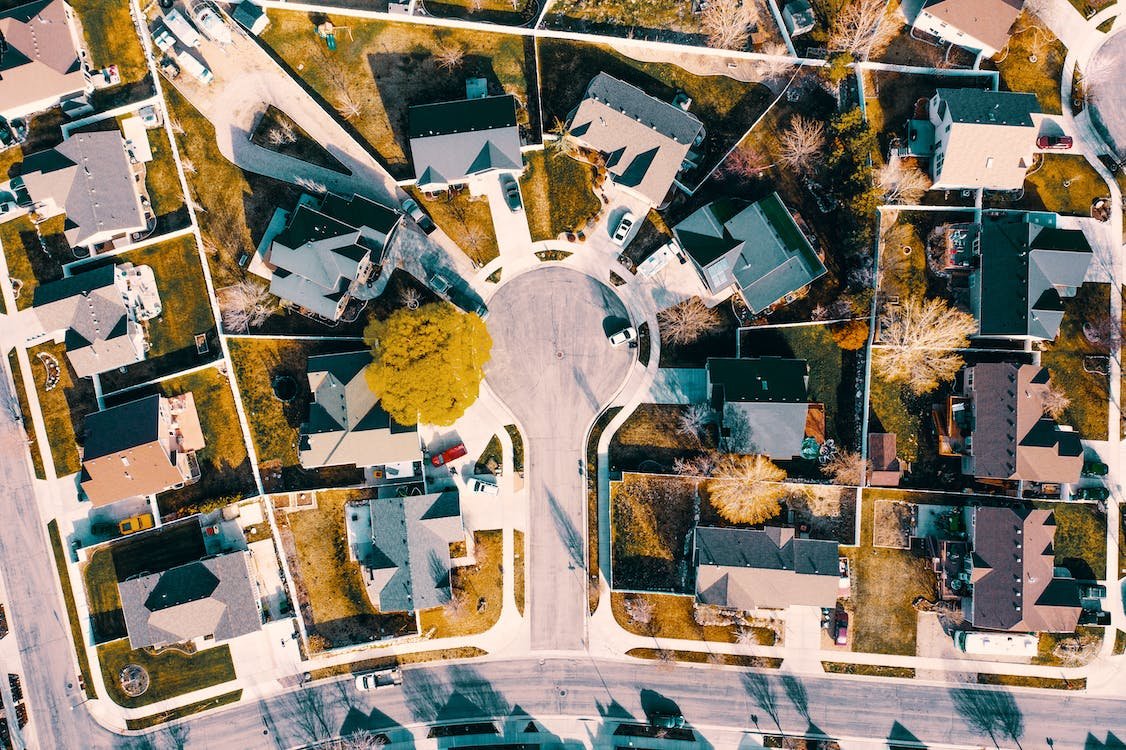
The Lack of Housing is a Generational Crisis

June 4, 2023 Nathan Bowling

As the average new mortgage in San Jose crosses $11k, we should all be paying attention

I've been baffled by the housing market in the United States for my entire adult life. It’s a lesson in unintended policy consequences like no other. While much of the media attention  goes to fluctuations in prices and rising mortgage rates, the deeper issues are those of supply and demand.

On the demand side, we have Millennial home buyers—the largest birth cohort in US history—emerging onto the housing market seeking to buy homes, followed quickly by Gen Z (the oldest members of Gen Z were born in 1997 and are now in their mid 20s). 

Constricting supply, we have a lack of construction of new residential housing, in particular in urban areas where job growth is highest. From the year 2000 until 2021, we went from 120 million housing units to 143 million nationwide, an increase of eighteen percent. But the total nationwide increase isn’t aligned with local demand. Here's Ann Lowrey in The Atlantic on the "underbuilding gap."

The National Association of Realtors compared the issuance of housing permits with the number of jobs created in 174 different metro areas. It found that only 38 metro regions are permitting enough new homes to keep up with job growth; in more than a dozen areas, including New York, the Bay Area, Boston, Los Angeles, Honolulu, Miami, and Chicago, just one new home is getting built for every 20-plus jobs created. The NAR estimates an “underbuilding gap” of as many as 7 million units.

So yes, even though we are building more housing, we’re not building nearly enough where the demand is highest, further driving up costs. Supply is further constrained because the Silent Generation and the Baby Boomers are living longer lives—Bismillah on that one—I am stoked to have the elders with us. However, further constricting supply is just plain bad local policy: insanely difficult permitting processes, overuse of single family zoning,  NIMBY-ism (masquerading as historic preservation), and good old-fashioned racism (masquerading as "concerns about preserving neighborhood character").

In Seattle, in my beloved Cascadia, over the last decade there was never a year when new housing growth was even fifty percent as high as job growth, meaning more dollars chasing relatively fewer homes.

Median mortgages and median rents in many housing markets nearly outpace the median monthly income. The old guidance used to be that no one should spend more than 30% of their income on rent or mortgage, anything beyond that was considered to be "rent burdened." But according to Pew in 2020 "46% of American renters spent 30% or more of their income on housing, including 23% who spent at least 50% of their income this way." Sometimes you can run by a stat and not really process it but I think it's important to pause on this one: nearly one quarter of American renters are spending 50% of their income on housing with no relief in sight.

Nowhere is this mess more apparent than in the Bay Area but the problem is likely coming soon to a metro near you. The classical definition of inflation is “too much money chasing too little supply.” This is the situation that has unfolded in the Bay. There’s ample demand because of new arrivals and job growth but because of the factors above, there isn’t enough housing being built, leading to soaring costs. The average new mortgage in San Jose is now a staggering $11,000 per month. This week I read a piece in the San Jose Mercury News that I think is worth quoting a length:

While some people choose to rent—and forgo building home equity—because they don’t plan to stay long-term, others can’t afford a down payment or qualify for a mortgage, a “situation that has become increasingly common due to rising mortgage rates and elevated home prices,” Redfin economist Taylor Marr said in a statement.

Nowhere is that more obvious than in the Bay Area, where deep-pocketed buyers competing for homes amid a severe shortage have sent the median single-family house price soaring to $1.25 million, a 28% jump over the past three years, according to the California Association of Realtors. At the same time, average mortgage rates have doubled to more than 6%, spiking monthly payments by thousands of dollars.

Those rising costs mean that just one in five Bay Area residents can comfortably afford to buy a median-priced, single-family home, according to a recent report by the association. Nationwide, 40% of people can afford a typical home at the national median price of around $371,200.

A 1.25 million dollar median home cost, $11,000 mortgage payments. Those numbers are insane and will only accelerate houselessness.

What’s happening in the Bay is happening in the Puget Sound, with a few years lag. Here’s homesales in Oakland (red) versus Tacoma (blue).

It’s easy to dismiss what’s happening in the Bay as a “California problem” but all the same inputs and many of the same bad policies are in place elsewhere. Above is data from the Saint Louis Federal Reserve. Home prices in Tacoma track the movements in Oakland but we’re headed where prices are there sooner than later. While the recently passed Middle Housing Bill in Washington State is a step in the right direction, it’s a drop in the bucket compared to the total demand that’s out here. We are essentially facing the comeuppance from forty years of bad policy and need a generational solution.

But I am not optimistic that we’re going to get one.

In Society Tags Housing, Bay Area

Sorry, Wrong Number: the Lowdown on Pig Butchering Scams

May 28, 2023 Nathan Bowling

The most prominent form of SMS text spam is Pig Butchering, a social engineering con targeting the 55+ crowd

I’ve written before that online privacy and security are priorities to me. Part of this is the usual Nate guarded cautiousness™. Part of it is seeing waves of people get their social media accounts hacked or their bank accounts compromised. In March, I suggested using a password locker but that it shouldn't be LastPass as their data security practices aren’t up to snuff and you shouldn’t trust them.

To be clear though, I am absolutely a layman when it comes to cybersecurity but I am going to return to that well this week and discuss Pig Butchering Scams and this damn dog.

On Wednesday night this text came in from a scammer trying to woo me with a picture of a walking allergen—little did they know I’m immune to the charm of cute dogs

Hope and I made a decision when we moved overseas to keep our US phone numbers. It makes texting with our older parents easier and T-Mobile’s international roaming gets us online quickly when we land in new places. Because of the time and distance difference, we talk to family when we wake up or before bed. Unless someone back home got hit by a bus, any text coming in during US daylight hours is spam (or a late night soccer take from Zach P). Over the last few years, the spam has evolved. There used to be calls (and voicemails) from American Benefits, student loan scammers, or the extended vehicle warranty guys but those calls went away because spam is an arms race. Tech and telecom companies build algorithms to filter incoming spam and the spammers adjust to circumvent the firewall (I know it’s not actually a firewall. I’m speaking colloquially, nerd). When you are getting a lot of spam, it means the spammers have outflanked the tech companies. When a variety of spam goes away, it means Google/Apple or your phone company have outmaneuvered the spammers.

The current spam texts we are all experiencing are attempts at Pig Butchering. The term Pig Butchering is a translation of shāzhūpán from Mandarin and emerged in China. It is a long-term con where the mark—usually someone 55+ with a lot of assets—is “fattened-up” over time before being “slaughtered.” These scams are particularly devastating because unlike credit card cons, which might take a few hundred dollars, the Pig Butchering marks are often taken for their life savings. 

Some recent attempts that’ve come my way:

(631) 743-XXXX -‬ David, I'm visiting you in Florida next month, do you have time to hang out with me?

‪(847) 718-XXXX‬ - Remember me?

(312) 882-XXXX‬ - I am on a conference call, I will call you back as soon as I am done.

I asked folks on Mastodon about their experiences and D.S. shared this one.

It’s worth noting that “Lily” is using the Nigerian +234 country code

The scams are carried out by armies of people, some of them victims of trafficking, working under duress in Asia. Here’s Vice on who is operating the scams:

But while this narrative of duped victim and online predator is as old as the internet, the scale of human suffering sustaining pig butchering is unprecedented in the world of online scamming. Propping up the industry are thousands of people trapped in a cycle of human trafficking, debt, forced labor, and violence; people from across the region lured by fake job adverts to scam centers in Laos, Myanmar, and Cambodia… individuals robbed of their life savings and plunged into debt, as well as those on the other side of the screen, imprisoned victims forced to groom others and scam. 

Both the victims and the con artists are being exploited in Pig Butchering.

I saw one of these cons unfolding online this week. On Reddit, u/flyingsmitty shared that his father-in-law was neck deep with a scammer promising guaranteed 3% daily returns. If anyone offers you 3% daily returns when the federal funds rate is 5.25%, you should run like hell. The original post included a link to the scammer’s web page but the post has since been edited. I visited the website; it promises impossibly high “guaranteed returns.” I could easily see how someone could fall for this trap, especially after hearing the returns talked up for months by their “online friend.”

The “VIP Investment Packages” being offered in the Reddit con including the minimum deposits and promised returns

With my mom in her 80s and Hope’s parents in their 70s, I’d be lying if I said I don’t get angry when I think about the possibility of some scammer preying on them. I think it’s worth having a hard conversation with your peeps about these scams. We all gotta find our own way of saying “no mom, your friend Esther from eleventh grade isn’t randomly texting you out of nowhere. It’s a trafficked scammer in Myanmar.”

In Society Tags Scams, Pig Butchering, Human trafficking

Fighting the Klan in the Ozarks and Teacher Bias in Grading

May 14, 2023 Nathan Bowling

I spent some of my favorite summers as a kid here in Camden, Arkansas

I go through seasons where I get deeply fixated on topics. If you’ve followed me online, you likely know this. In quick succession, during the worst parts of Covid, I went in hard on fantasy and sci-fi books. I read A Song of Ice and Fire (the Thrones books) and Dune (well, the first three—Herbert really lost me at God Emperor of Dune). I also read N.K. Jemisen’s Inheritance Trilogy, and the Foundation books (again, up until they became incoherent). 

As I’ve mentioned on the blog before, I’ve spent much of the last year or so pouring through crime and noir novels. The most recent one I got my hands on is Ozark Boys by Eli Cranor. I’ve talked about Cranor here before. He was a guest on the podcast and is genuinely a chill dude. He cut his teeth reading Elmore Leonard novels and teaches English to incarcerated youth in Arkansas.  I like his vibe and his choice of setting for his novels. I am notably not Southern but I have an affinity for Arkansas. I spent several summers as a kid on a farm in Camden living with my aunts & uncles. They were the siblings of my grandmother who had remained in the state when my mom’s side of the family made their way to Washington. They were all born around the turn of the century: Uncle Walter & Aunt Sal and Uncle Peach & Aunt Willamay. I’m sure I was more of a nuisance than a help but they tolerated me. I helped Uncle Walter pick melons and  load them in the truck to take them to market. I fed hogs and picked & cleaned collards. On Sundays,  I helped make scratch biscuits.  I once snuck a pinch of Aunt Sal’s chewing tobacco and regretted it immediately. I really don’t think anyone knew what to make of me when we went into town and to church. I spoke (still do) at a rapid clip and was verbose in a place where kids were supposed to be in the background. But I remember summers on the farm as clearly as anything from my childhood. I realized recently what a stroke of genius this was by mom—a plane ticket was cheaper than summer camp—and shipping me off allowed her to work more overtime (or turn-up, who knows?) without worrying about my giant headed self getting into trouble.

Eli Cranor's new novel "Ozark Boys" is a banger

Cranor’s first book played in a pretty safe sandbox. It was equal parts Romeo & Juliet and Friday Night Lights, set as a Southern Noir. Ozark Dogs is in the same universe but it feels more ambitious and expansive. In this second novel, the setting moves from the fictitious town of Denton in Eastern Arkansas (closer to Memphis) to the Ozarks. The shift in setting creates a change in character vernacular that highlights the regional diversity of the state.  

Within the first few dozen pages, stark moral lines are drawn between the warring factions—the ordinary toughs who were meant to empathize with, the Fitzjurls, and the meth dealing-Klan-fascists, the Ledfords. Something that’s important to me in a book like this is that when we meet a neo-Confederate or Klansman, they can't be a sympathetic character. IDGAF—that's non-negotiable for me. Cranor passes this test and I am going to try to stretch this one out until SA Cosby’s All Sinners Bleed comes out next month. If I’ve piqued your interest in Ozark Dogs, pick up a copy and share your thoughts as you read it.

Let’s Wax Pedagogic and Get Wonky About Grades - We’re nearing the end of the school year and many of the conversations at school are turning toward next year. It will be my fifth year here in the Gulf. As a school community, we’re moving to a new campus next year. This brings in other changes. They’re building a new daily schedule better suited to the larger campus and UAE’s recently implemented four and a half day work week. We’re also transitioning to a new tool for managing our grades. Each of these: the move, the reworked schedule, and the new grading system, represent an opportunity to rethink the way we do things but education is a profession that is uniquely averse to change. 

The whole point of this week’s newsletter is that I am prone to fixating and as of late I find myself particularly unsatisfied with my grading practices and all the noise and variability inherent to the process. What does an “A”  mean to parents? What minimum skills should a student demonstrate in order to earn a “B” in a given course? What are you communicating when you give a student a “B-” rather than a “C+”? You’ll get as many answers as people you ask. All this ambiguity is compounded by other factors including teacher bias. It doesn’t matter how justice-oriented you are, we all have our internalized prejudices and preferences. Anyone saying otherwise is lying. This video and the study that inspired it made the rounds in the past but they’re worth revisiting. If you accept that bias is real and there’s ample research telling us it is, it’s worth considering how we can remove bias as much as possible from our assessment practices. 

Yesterday afternoon, I recorded a winding interview with Arthur Chiaravalli from Teachers Going Gradeless that I will link to when it comes out. A point I tried to make repeatedly in that conversation is that we should try to control for our personal and cognitive biases as much as possible and we should also lean into professional practices that remove or limit subjectivity in grading. I think we pay lip service to this in the profession but many of us, if asked to defend a given grade, would find ourselves at a loss. There’s a move against calculated grades in the profession that I think is well-intended but takes us further into the subjective and thus introduces more opportunities for bias.

Look, I’m a Greener—the ideal is to nuke grades and move to wholistic narrative evaluations (written by teachers in cooperation with students)—but until that day comes, we should be wary about how we allow bias, prejudice, and the application of selective benefit of the doubt to creep further into assessment.  

I have more to say here but I want to put a pin in this for now. I have a piece coming out on this topic later this month and I will share that and the podcast interview when they come out.

As always, thanks for reading the newsletter. If you'd like to opine just hit reply on the  email. I welcome your feedback (especially if you think I am wrong about something) and if you like the newsletter, share it with somebody you love. 

See you next week!

In Education, Society Tags Southern Noir, Arkansas, grading
Comment
← Newer Posts Older Posts →

POWERED BY SQUARESPACE