In June 2025, I recorded a conversation with Bill Fitzgerald about artificial intelligence. I ended up getting an earful from him about immorality within Big Tech and some of the aspiring oligarchs within the so-called “ed tech” realm.
That discussion stuck with me.
Bill drove home that AI is a form of surveillance. If you use ChatGPT or a similar LLM frequently, go into its settings and check its “memories” and see what it has retained on you. Then check the terms of service or EULA. What terms have they set around data retention? Who can they sell or share your data with? What’s their policy around warrantless law enforcement data requests?
In some ways, that episode was a continuation of a conversation I've been having about AI and online privacy for over seven years. One of the final episodes of the podcast I recorded before moving overseas in 2019 was called Mommy, My Teacher Got Replaced by a Robot. In that interview and subsequent ones, I’ve noted the non-consensual nature of AI deployment. The major tech companies are hell bent on integrating AI into places where no one has asked for it and then retaining all the data from all the interactions you have with the models.
People aren’t asking for this.
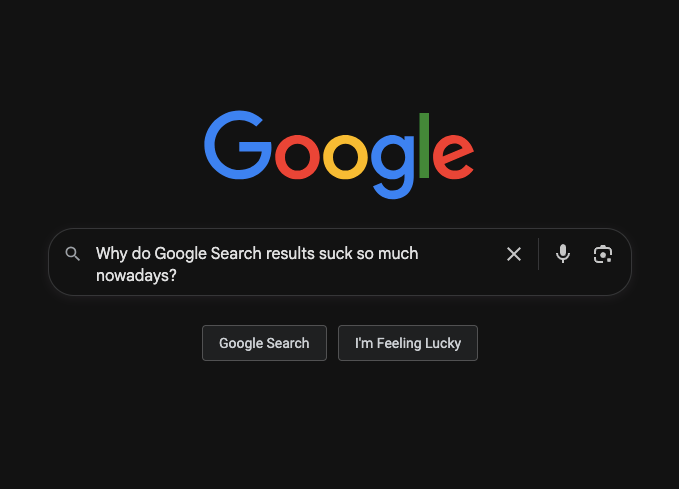
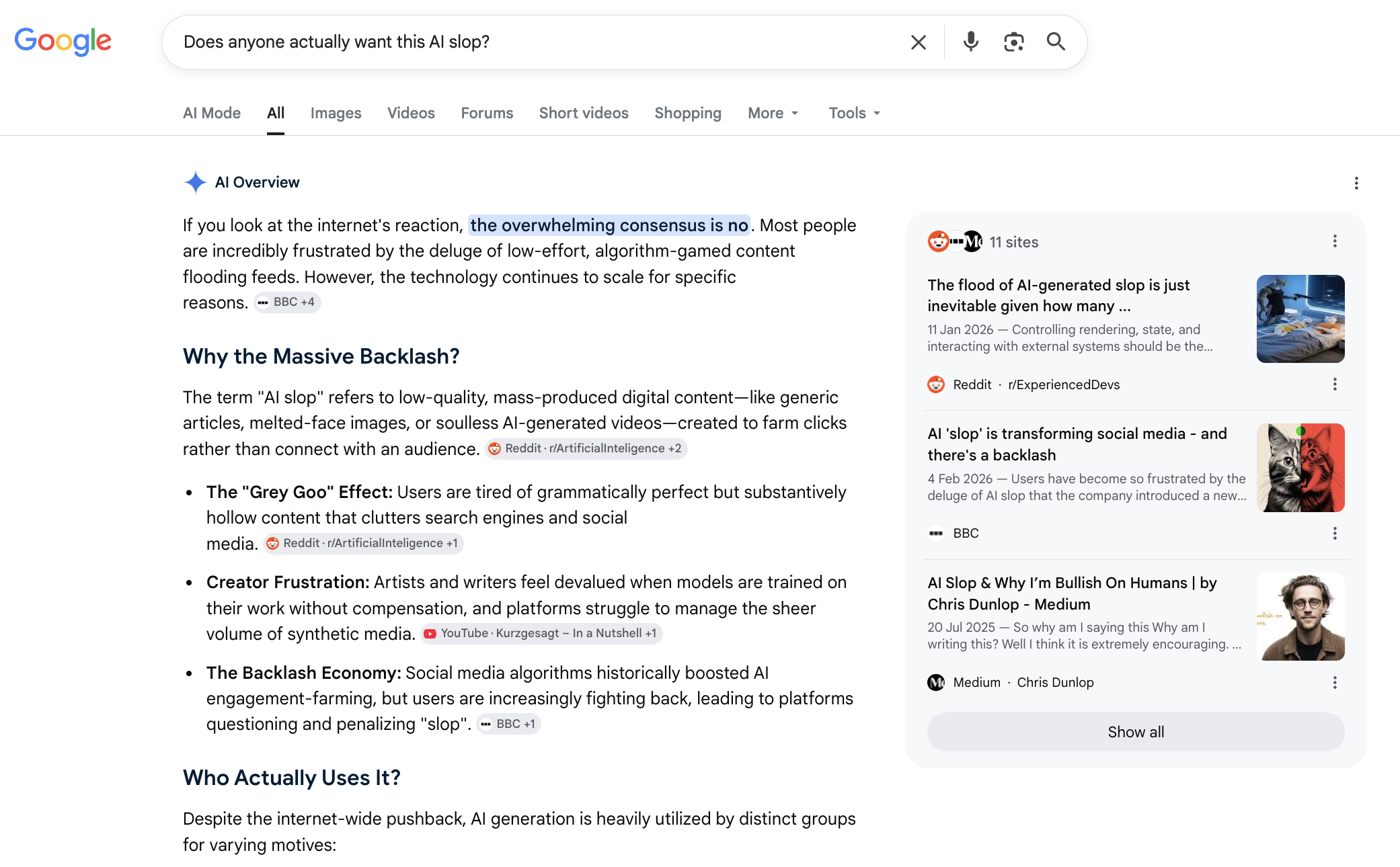
Specifically, when it came to AI in my day-to-day, I was bothered by the declining quality of Google's Search results and the insertion of AI slop into my queries and finally I had enough (see the example below, bleck!)
Put up or shut up, those were my choices. In June of 2025, I dropped Google Search and Chrome. I experimented with different browsers and search engines in various combinations trying to find what works best for me. My current set-up is Brave as my browser with DuckDuckGo as my default search engine. I landed on DuckDuckGo only recently (May 2026) after experimenting with some of the options described below.
A bit of context: Google’s Chrome browser is based on Chromium, which is an open source software program. Google adds a proprietary layer on top and packages it as “Chrome.” But since Chromium is open source, anyone can take that foundation and build their own browser — as Brave, Ecosia, DuckDuckGo, and many others have done.
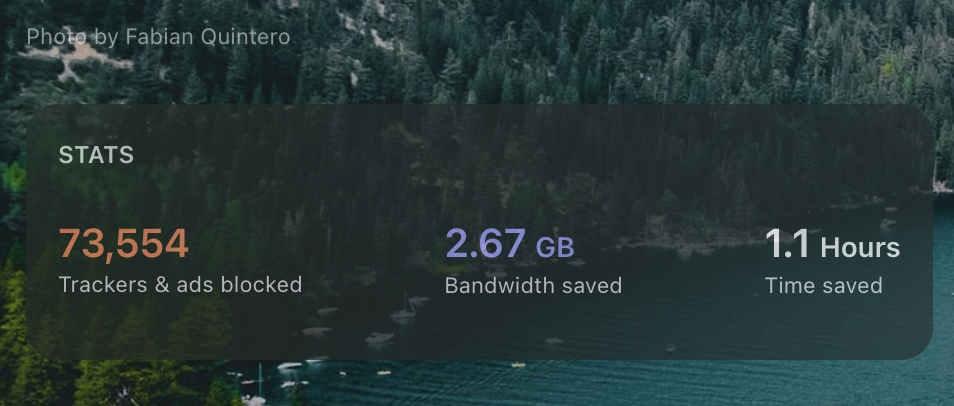
Brave is a privacy-focused browser with some rigorous ad and tracker blocking built-in. They have a scorecard when you open the app showing the number of ads & trackers that have been blocked and how much time & data that that’s saved you.
Besides the privacy features my favorite feature of Brave is their cross device sync. Most browsers sync through an account you create, usually tied to your email address, and thus your personal info. You sign in, and the company stores (hopefully) encrypted copies of your bookmarks, history, passwords, and settings on its servers. Brave doesn’t require you to create an account. Instead, it uses a system called Sync Chain. When you create a Sync Chain, Brave generates a 25 word sync code, a set of cryptographic keys like a Bitcoin wallet, that allow you to sync across devices.
Brave also makes a search engine that I am less fond of. It’s really not great — but that’s the point. I’m not wedded or hostage to one platform or eco-system, subjected to the whims of its devs and management.
Ecosia’s offers a search engine and a Chromium based browser. You don’t need to use both, again you can mix & match. They lean into a social-capital gimmick: they pledge to plant trees based on the number of searches conducted.
Ecosia doesn't run its own search index the way Google does. Instead, it acts as a search layer that gets most of its results from other providers. As of 2026, Ecosia says its search results come from three main sources:
Microsoft Bing
Google
EUSP (European Search Perspective), a joint search index developed by Ecosia and the French search engine Qwant (more on Qwant in moment)
So it’s a do-gooder search engine that searches other search engines, providing you with the results.
Qwant is just a no frills search engine, with no AI integrations and a pledge to keep it that way. Qwant like Brave is privacy focused. It does not create detailed advertising profiles of users and does not track individuals across the web for targeted ads. It also positions itself as a European alternative to Google, an effort to break the continent’s reliance on US tech companies. To me, using Qwant feels how Google Search felt in the 2010s.
I expected some kind of drop-off in search quality when I moved away from Google, but it was the opposite. Google Search has degraded so much over the last few years that it’s nearly useless. The enshittification happened gradually, but it’s obvious to anyone who’s tried to look up something specific lately that Google Search is broken. I don’t remember who said it first, but it’s stuck with me: Google Search now basically operates in one of two modes. If it can serve you a volley of ads based on your query, it will. If it can’t, it hands you AI slop from Gemini.
This is what non-consensual AI deployment looks like. I didn’t ask for these garbage Gemini results, and I didn’t ask for my searches to be flooded with barely readable articles churned out by AI content farms. It is a death spiral for the open internet, and I want no part of it.
I want to be clear here, this isn't some sort of big moral crusade. But we have to start asking ourselves at what point do we start pushing back against the monopolistic practices of big tech and should we really trust them with all the personal, medical, and financial data we do? You’d be shocked what some people put into Chat GPT.
Meaningful regulation isn’t coming in the near term, so it’s up to us to help ourselves.
* A version of this article originally appeared in my newsletter Takes & Typos