• Home
  • Blog
  • Media
  • Contact Me
  • Newsletter
  • Bowlings Abroad
  • Nerd Farmer Podcast
  • Teaching Civil Liberties
  • Supporting Undocumented Students
Menu

Nate Bowling: American Teacher Abroad

Street Address
City, State, Zip
Phone Number

Your Custom Text Here

Nate Bowling: American Teacher Abroad

  • Home
  • Blog
  • Media
  • Contact Me
  • Newsletter
  • Bowlings Abroad
  • Nerd Farmer Podcast
  • Teaching Civil Liberties
  • Supporting Undocumented Students

Cormac McCarthy and SA Cosby Are Masters of their Craft

March 12, 2023 Nathan Bowling

Blood Meridian is a book about the worst people possible, doing the worst things possible, along what we now call the US/Mexico border | Photo by Lisa Yount on Unsplash

We don’t know much about Cormac McCarthy. The 89 year-old is a recluse, residing near Santa Fe. His role in the culture relative to his presence in it are in inverse proportion. A while back, a Twitter account popped up purporting to be McCarthy. His publisher quickly explained it was fake because McCarthy doesn’t own a computer.  

We also don’t know much about McCarthy’s politics but the hints we get indicate he’s a Western traditionalist conservative. Sometimes his characters give us a glimpse of his worldview. Both Ed Tom Bell and the El Paso Sheriff from No Country for Old Men seem to be avatars for McCarthy, bemoaning the changing culture and the death of the world they knew and had once mastered.

McCarthy writes his novels and correspondence on a typewriter from 1958 and I swear I read somewhere that he built his house by hand. The dude is just different. McCarthy published Blood Meridian in 1985. He had been writing for at least twenty years by then but the grump didn’t do his first TV interview until Oprah made The Road one of her book club selections in 2007.  

Blood Meridian is arguably his most acclaimed work. It’s a laughably simple story. A group of marauding American mercenaries ride through the West killing, robbing, scalping, and assaulting Comanche and Apache Natives at the behest of the Mexican government. But their spree begins to include killing everyone in sight. They’re called the Glanton Gang, but their true leader is an unaging, grotesque, deeply philosophical, sadist, named the “the Judge,” who spends much of the book naked. He’s like Baron Harkonnen but in 1850. If you’re a remotely normal person, at this point you likely have some questions. 

The plot of the book is limited but what’s notable is the prose. McCarthy writes with a compelling locomotion despite the frequent deployment of slurs by his characters, constantly referring to natives as “savages,” and anyone darker than an albino as the n-word. This is a passage I dog-eared:

What is true of one man, said the judge, is true of many. The people who once lived here are called the Anasazi. The old ones. They quit these parts, routed by drought or disease or by wandering bands of marauders, quit these parts ages since and of them there is no memory. They are rumors and ghosts in this land and they are much revered. The tools, the art, the building — these things stand in judgement on the latter races. Yet there is nothing for them to grapple with. The old ones are gone like phantoms and the savages wander these canyons to the sound of an ancient laughter. In their crude huts they crouch in darkness and listen to the fear seeping out of the rock. All progressions from a higher to a lower order are marked by ruins and mystery and a residue of nameless rage. So. Here are the dead fathers. Their spirit is entombed in the stone. It lies upon the land with the same weight and the same ubiquity. For whoever makes a shelter of reeds and hides has joined his spirit to the common destiny of creatures and he will subside back into the primal mud with scarcely a cry. But who builds in stone seeks to alter the structure of the universe and so it was with these masons however primitive their works may seem to us.

None spoke. The judge sat half naked and sweating for all the night was cool. 

As I said, the story is not remarkable but the writing is. At times, I found myself asking why am I reading this, then coming across a passage like that and saying to myself “oh yeah, that’s why.”  

McCarthy released a new book last year called The Passenger. I tried it but didn’t finish it.  After reading Blood Meridian, I plan to return to it. 

Y’all Gotta Read this Man SA Cosby
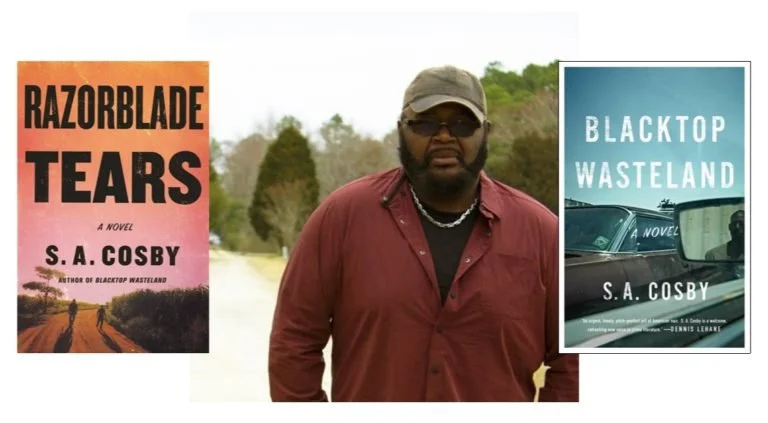
SA Cosby is writing the best southern noir books in the game right now

As I’ve discussed prior, I am on a spree of crime and southern noir novels. It’s the genre of Elmore Leonard, sometimes McCarthy, and as of late the giant of the genre, SA Cosby. His forthcoming book is called All Sinners Bleed.  It’s his fourth novel; the first three: Razorblade Tears, Blacktop Wasteland, and My Darkest Prayer are all highly recommended. He writes with an authentic Black voice in a genre often rife with preposterous Black characters and clownish dialogue. 

The Obama Administration’s inability to deliver meaningful policy on matters of racial justice showed us the limits of representation as a force in politics. But representation and cultural competence in the subjects you’re writing are a must in works of fiction.  I’ve read far too many books and watched too many series with poorly written Black characters. They ruin otherwise wonderful novels and make me turn off  shows I otherwise enjoyed. There’s no universal Black experience but inauthenticity and a writers’ room that looks like Augsuta National leap off the page. The “Magical Negro” and the “Black bestfried as moral compass” are among the most tired tropes but there are legions of others. 

I pre-ordered All Sinners Bleed for its June release. I don’t think I’ve ever pre-ordered a book in my whole Blackity-black life but his writing is that good. 

I also mention Cosby here because his name came up in a recent episode of the podcast. I was chatting with Eil Cranor, an Arkansas based writer who also writes in the genre. I asked him who he reads or whose work he admires. The first name he mentioned was Cosby and we shared our mutual love for his work. Cranor is no slouch himself. His debut novel Don’t Know Tough is a slow burn that morphs into a page turner about a hard headed star football player named Billy Lowe and all the trouble that befalls him. I think both the book and my conversation with Cranor are worth your time.



In Culture Tags Cormac McCarthy, SA Cosby, Books, Southern Noir

Demanding a Seat at the Table

March 5, 2023 Nathan Bowling

You’ll never get what you don’t ask for | Photo by Kane Reinholdtsen on Unsplash

In the days of yore, I used to digitally accost education beat writers and other reporters for the way they covered issues impacting schools. Way too often in discussions about education policy, students and teachers are the subjects of the reporting but absent from it. When writing about legal matters, reporters quote attorneys. When writing about medical matters, they cite doctors or medical researchers. But when it comes to education, the voices of practicing teachers are almost always absent. 

Instead, they talk to economists, legislators, even hacks like Liv Finne at allegedly “non-partisan” “think-tanks” (I put both terms in quotes because non-partisan ≠ non ideological and because the amount of thinking that goes on at the Washington Policy Center is debatable). Ideologues get column inches but teachers aren’t worthy. That paradigm never sat well with me and being the (occasional) brute I am, I’d make it my business to call it out.

Image is three tweets by the author calling out the Seattle Times and Crosscut for excluding the voices of teachers in their education coverage.

My Twitter fingers have been quiet for a minute now but I am asking you to call this nonsense out whenever you see it

You’ll never get what you don’t ask for—each one of those resulted in a response from the publication. The Seattle Times story about the Tacoma strike was updated to include quotes from local teachers; Crosscut added State Teacher of the Year, Lyon Terry, to the panel at their event; The Times later published my op-ed offering a differing perspective about pending teacher evaluation legislation.

If I took the time to go for people’s necks about excluding teacher voices in the past, it makes sense to give flowers when they’re due today. Anne Helen Petersen, wrote this week about the burden of school spirit days and themed dress weeks/months in elementary schools. As a teacher in high school much of this was (thankfully) foreign to me. I don’t have a dog in the fight—I can’t be bothered with dressing up for Halloween, forget about the “100th day of school” or “Bling in the Holidays.” It all  sounds exhausting and a distraction from the business at hand. But I’m bringing this up to highlight how Helen Petersen covered the issue. In setting up her story she wrote the following:

Still, I knew my annoyance was missing some vertical and horizontal contextualization…. I also knew that these days were meant to engender community, infuse the school day with some level of joy, and incentivize attendance — all things most schools are desperate for, particularly post-Covid shutdowns….

For today’s post, I asked educators to offer that context. The sampling you’ll find below comes from 150 responses from all corners of the country, in all types of schools, at all different levels, and with different levels of animus or apathy towards these days.

Look how easy that was: she saw an issue in schools that she knew was fraught in some circles. She sought input and context from educators and then shared their stories. If we can do this when it comes to themed dress days, then we can do it around compensation, evals, authoritarian book bans, and the myriad other issues facing schools. It’s a matter of taking the time and valuing teacher voices.

Publications and individual journalists respond to pressure. It’s often an oversight, rather than malice. If you find yourself reading a story about schools but ignoring the people who work in them, I encourage you to call it out.

In Education Tags Media

The Feds Were Asleep at the Switch for Crypto, AI Could Be Much Worse

February 26, 2023 Nathan Bowling

Police in Dallas used a robot, armed with a brick of C4 to kill a barricaded shooter ending a standoff in 2016—the department later fought the release of records about the decision making process leading up to the killing

An annoying part about getting older is that you realize how cyclical things are and that much of life is the same hustles and hassles with new names and labels. Whatever your thoughts about cryptocurrency (I'm a skeptic but also own a small amount), it's indisputable the sector is rife with scams, rugpulls, and unregulated securities. As a result, billions were lost in crypto hacks and scams over the last two years (see table below). This isn’t counting the firms like FTX, Celsius, and Voyager that went under, wiping out an additional 200 billion dollars from retail investors and people who trusted the shadow banks called crypto exchanges.

The Securities and Exchange Commission (SEC) finally woke up from its multi-decade slumber this month and issued massive fines against several crypto exchanges and the influencers shilling for them. Retired NBA star Paul Pierce was fined 1.4 million dollars for promoting a token called Ethereum Max. EMax was a pump & dump scheme where new investors were served up as exit-liquidity for the founders. EMax currently trades at $0.00000000099 per worthless token. Kim Kardashian was fined a similar amount for touting the same token in December. Regulators have stablecoins in their sights. Crypto exchange Kraken agreed to a 30 million dollar fine and agreed to shut down their staking program (if you don’t know what crypto staking is, you’re probably better off that way). Kraken’s rival Binance is expecting a massive fine as well.

2022 was a record year for hackers in crypto - Source: Decrypt, data from Chainalysis

The handwriting was on the wall for years about crypto scams but federal authorities waited over a decade before acting. In the interim millions of people were harmed. A regulatory framework for crypto exists and has existed since before the first token came to market. We can't afford to wait fourteen or even four years for the government to set the ground rules for AI. The potential for society wide harm is incalculably larger. 

After-the-fact debates are biased toward the expansion, rather than limitation, of a practice. In 2016, the city of Dallas had to reckon with the question of whether they would allow police to kill a barricaded shooter with a remote operated drone. They decided "yes" this is an acceptable use of force. Unfortunately, they decided it retroactively, months after the police had killed their target (with a Remotec Androx Mark V A-1, manufactured by Northrup Grumman). The police department refused to release documents related to the decision to use the robot and the city absolved the chief and the entire chain of command after the incident. The police chief, David Brown, now runs the police department in Chicago and there’s now a precedent regarding the use remote operated robots to kill people.

As venture capital abandons crypto projects, opting to fund cowboy AI projects, policymakers can't be passive. The potential harm from AI in journalism, financial markets, deep-fake aided scams, and law enforcement use of force have the potential to do far more damage than the crypto bros. Letting the DARPA and Boston Dynamic chips (see video) fall where they may is societal malpractice. If my concerns here seem alarmist to you, imagine trying to explain in-flight wifi to someone in 1994.

We can't wait to make the decision about the limits we will put on the use of AI until after they’re deployed. If you don't think there's people in law enforcement salivating to deploy AI robots and drones in low-income and Black neighborhoods, you don't know American history.

In Politics, Society Tags AI, Civil Liberties
← Newer Posts Older Posts →

POWERED BY SQUARESPACE